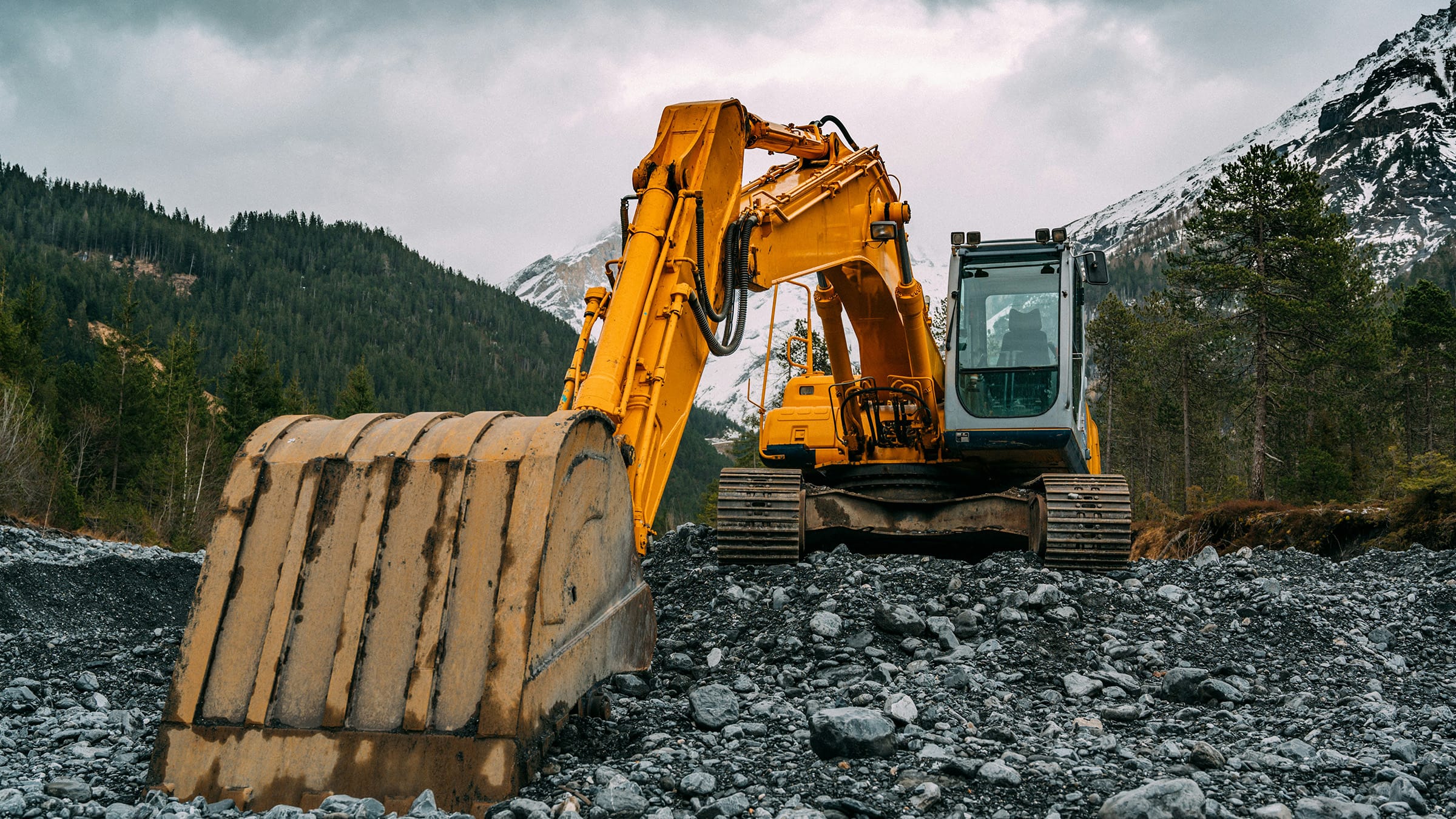

Caterpillar, Volvo, Komatsu, Hitachi, Doosan and Hyundai excavators remapped on site by our network of 400+ trained and authorised agents. Bespoke calibrations written in-house since 2014, every one backed by a lifetime warranty.
Improved Excavator Performance Matters
On most sites, the excavator decides how quickly everything else happens. The lorries wait on it, the muckaway rate is its cycle time, and the programme is built around how much it can move in a day. When the machine is slow, everything else is slow as well.
The factory map is where a lot of that lost time comes from. Manufacturers calibrate for a global market, for fuel quality that changes from one country to the next, for altitude, for ambient temperatures at both extremes, and for an emissions test cycle that looks nothing like a wet clay dig in January. What comes out of the factory is a cautious compromise, and your machine carries it through every hour it’s working.
An Engine That Only Feeds The Pumps
An excavator does not work like a truck or a tractor. Almost nothing the engine produces goes into moving the machine. It goes into the hydraulic pumps, and the operator works with the throttle set, letting the pumps take what they need while the engine holds its speed. Dig, swing, boom up, dump, swing back, and start again, with hydraulic demand arriving continuously through the shift.
That changes what a remap has to do. There is no wide rev range to spread the gain across, so the torque has to arrive at working speed, where the pumps are pulling hardest. We optimise fuelling, boost, and injection timing so the engine maintains speed under pump load, preventing the boom from slowing as you crowd into the face. Pump control is tied to the engine map, so when the engine has more to give at working speed, the machine has less reason to hold the pumps back.
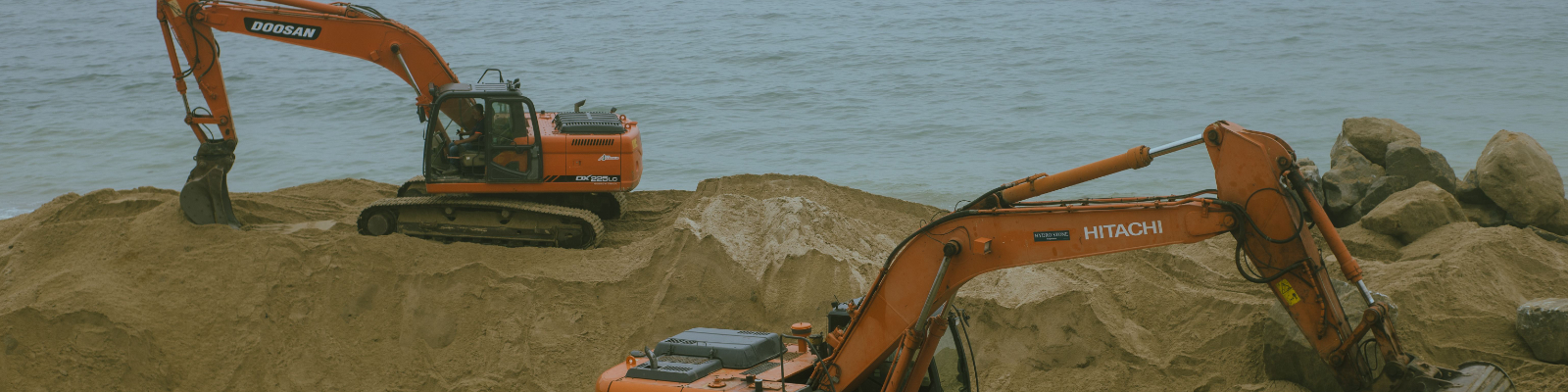

The Smart Business Case For Excavator Remapping
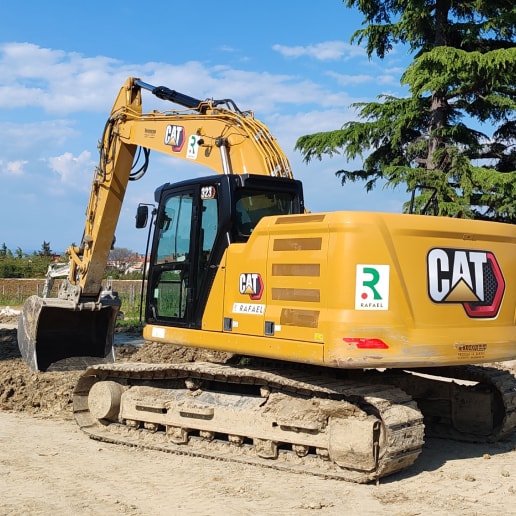

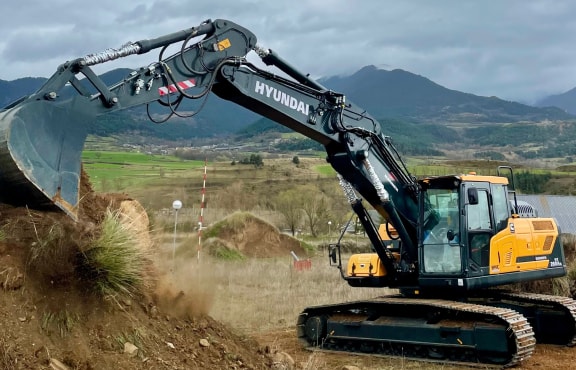
Excavator work is measured in cycles and hours, and both of those are money. A machine that takes a second less to fill the bucket and gets the swing round quicker loads more lorries in a shift. On muckaway, that is loads off site. In a quarry it is tonnes through the crusher. On a groundworks programme, it is the machine off hire earlier.
The fuel case is strongest where the engine is working hardest. Trenching in heavy clay, loading continuously, running a breaker, digging at full reach, working across a slope: this is where a cautious factory map burns fuel holding revs it does not need to hold. In our heavy-duty work, we see fuel efficiency improvements of 5% to 15%, and the machines at the top of that range are the ones under load all day. An excavator burning fuel at 1,200 hours a year does not need a large percentage for the savings to be worth it.
For contractors running mixed fleets, there is a second argument. Remapping the smaller or lower-rated machines brings them closer to the bigger ones, so there is less time lost working out which machine goes to which job, and less temptation to move a heavier machine onto site at low-loader rates when the one already there could do the work.
Attachments make the case sharper again. Breakers, shears, mulchers, crushers, augers, and tiltrotators require continuous flow at pressure, and that is exactly where an underpowered machine shows its limitations. If your excavator spends most of its life on the hammer, tell your agent, because that changes how we weight the calibration.
Our calibrations are written around the whole machine. Hydraulic pump capacity, cooling capability and final drive limits all frame what we will and will not ask your machine to deliver.
Importantly, we understand that none of the improvements is worth having if the machine is unreliable. Our maps never sacrifice reliability for performance because we work within the manufacturer's own tolerances for exhaust gas temperature, rail pressure, and torque, and we will hold back on power before taking any risks with reliability.
Understanding Excavator Engine Platforms
The most useful thing to know about excavator engines is how little the hardware changes between power outputs. Manufacturers build a small number of blocks and separate the machines on software, turbo specification and emissions calibration. The evidence sits in our own model coverage.
Case splits the CX range across four blocks, and the 7.8 litre carries the clearest gap: 216hp in the CX 300D and 282hp in the CX 350D. Sixty-six horsepower separates two machines running the same engine. Below that, the 5.2 litre sits at 160hp in the CX 210C LR and 166hp in the CX 210D, and the compact CX 145D SR runs 2.9 litres at 105hp. Case backhoe loaders are covered as well, and they make the same point more bluntly. One 3.4 litre block runs at 74hp and 95hp in the 580SN, 97hp in the 580ST and 580SV, and 110hp in the 590ST and 695ST.
Caterpillar's 4.4 litre block is the clearest illustration on the whole platform. It runs at 99hp in the 315F, 121hp in the 320GC, 122hp in the 316E and 318F, 134hp in the 313D and 161hp in the 320FL. One block, five factory ratings, and 62hp between the lowest and the highest. The 7.1 litre does the same higher up, at 160hp in the 323FL, 169hp in the M320F and the 953K, and 240hp in the 324E and 329E before reaching 275hp in the 330. Above that sit the 8.8 litre C9 machines at 266hp and 316hp, the 9.3 litre 336F at 313hp and the 15.2 litre 349F at 417hp. Legacy Tier 3 machines are covered too, including the 313D, 315D, 319D and 323D LN.
Doosan's 5.9 litre carries most of the DX range, at 95hp in the DX140 LC, 139hp in the DX170W, 166hp in the DX225 LC and DX235 LC, 173hp in the DX190 W-3 and DX245 NHD, 177hp in the DX180 LC-5 and 189hp in the DX210 W. Hyundai does the same with the 6.7 litre, at 145hp in the R235 LCR-9, 180hp in the HX220L and HX260L, 184hp in the R250 LC-9, 197hp in the R290 LC-9, 232hp in the HX235 LCR and 260hp in the HX300L. Above those, the HX330L, HX380L, HX480L and HX520L step up through 8.9, 9.0, 11.4 and 13.0 litres to 424hp. Wheeled and mini machines are covered as well, including the DX190 W-3, the DX210 W and the DX85 R-3.
The ZX range runs from the 130-3 at 105hp to the 850LC-3 at 540hp, and the repeats through the middle are what matter. The same 123hp rating covers the 140W-3, 145W-3, 160LC-3 and 180LC-3. The same 166hp rating covers the 190W-3, 210LC-3, 225USLC-3 and 225USRLC-3. At the top, 353hp covers five machines from the 450-3 to the 520LCH-3. When one rating is asked to serve four machine sizes, the smaller machines in that group are running hardware specified for the largest.
Kobelco's 5.1 litre is used extensively. It runs at 134hp in the SK170 LC and SK180 LC, at 166hp in the SK210 LC, SK210-9, SK230 LC and SK270 LC, and at 185hp in the SK260 LC. One engine, three ratings, and the 166hp figure is asked to cover four machines of different sizes. The SK210 LC is worth a second look because we list it at 166hp on the 5.1-litre and 150hp on the 6.7-litre, which means the larger engine is rated lower. Above those, the 7.7 litre runs 286hp in the SK350 LC and 363hp in the SK500 LC, and the compact end is covered by the 3.0 litre ED160 BR-5 and SK140 SR.
Komatsu splits its 6.7 litre between 156hp in the PC200-8 and PC210-8, 165hp in the PC210 LC-10 and 213hp in the PC290 NLC. The 8.9 litre runs at 247hp in the PC350 LC-8 and 271hp in both the PC360 LC and the HB365 LC hybrid. Lower down, the 4.5 litre sits at 121hp in the PC160 LC-8 and 148hp in the HB215 LC, and the PC490-10 tops the range with 11.0 litres at 359hp. We also cover the WB 97R backhoe loader and Komatsu dozers, wheel loaders, dumpers and skid steers.
Liugong makes the argument inside a single model. The 925E appears on our platform twice, both times with the 6.7 litre engine, once at 173hp and once at 190hp. The hardware does not change between them. That same block sits at 173hp in the 922E and 209hp in the CLC930E, while the 915E runs 4.5 litres at 168hp and the 950E tops the range with 12.0 litres at 400hp.
Sany's excavator coverage is smaller, and the interesting part is what those engines do elsewhere. The SY215C runs a 6.7 litre at 173hp. The same displacement is rated at 213hp in the Komatsu PC290 NLC and 260hp in the Hyundai HX300L on this platform. The SY305C uses an 8.9 litre at 280hp, below the 300hp the same size delivers in the Hyundai HX330L, and the SY135C rounds the range off at 3.0 litres and 98hp. A machine sitting at the lower end of what its displacement is asked to produce elsewhere is a machine with headroom, and Sany's sit there.
Takeuchi is compact work, and the ratings still move about. The TB 290 runs 3.3 litres at 68hp while the TB 295 runs a smaller 3.0 litre at 103hp, so displacement and output are not tracking each other at all. The TB 2150R sits at 3.6 litres and 114hp, and the TB 240 at 2.1 litres and 36hp. Compact machines earn their money on hire and in confined sites where nothing bigger will fit, so the gain shows up in tracking, in lifting over the blade and in how the machine copes on a breaker.
Volvo's wheeled range makes the point in one line. The 5.7 litre engine appears at 150hp in the EW160E, 154hp in the EW160D and 173hp in the EW180D, EW180E, EW220E and EW240E. Four different machine sizes, one engine, one rating, which means the lighter machines are carrying an engine specified for considerably more work than they are asked to do. The crawler range follows the same logic: 140hp from the 4.0 litre in the EC160DL and EC160EL, 165hp and 173hp from the 5.5 and 5.7 litre in the EC210D and the EC220 machines, then 288hp, 303hp, 360hp and 378hp all from the same 12.8 litre block across the EC380D, EC380E, EC480DL and EC480E.
Every Machine Is Quoted On Its Own Merits
We do not publish one set of figures for excavator remaps, and the lists above explain why. The same model number appears across different outputs and Tier stages, sometimes with a different engine underneath. Our platform carries the DX140 LC at two different displacements. The 336E is available with two different engines and multiple ratings. Quoting one number for a 336E would be meaningless, and quoting an average would be worse.
Give your local agent the model, engine, and emissions stage, and we will come back with what our R&D team has developed for that exact variant and where you will notice it in the work.
Our in-house file writers develop bespoke calibrations for individual variants, which is why we can be specific about your machine instead of vague about the range.
Contact us
How We Remap Your Excavator

The Health Check First
Before any work starts, we run a full diagnostic health check. If the machine has a logged fault, a failing sensor, or an injector on its way out, remapping will not be performed until the issue is resolved. We will tell you what we have found and what needs to be done first.

Your Original Map, Saved
We read and back up the original calibration to a dedicated server before we write anything. It stays there permanently, so your excavator can go back to factory settings at any point in its life, whether that is next month or three owners from now.

Loading The New Calibration
We load the calibration developed for your engine variant, then check the machine over and put it back to work. Most excavators are finished within a few hours and are back digging the same day.
Flexible Service For Plant Operators
Almost all of our excavator work happens where the machine lives. Our agents come to the site compound, the quarry, the plant yard or the depot with everything they need, and the machine goes back to work when they leave. For an excavator, that is usually the only sensible option, because moving one requires a low loader, a driver, and often a permit, and the cost of that alone could outweigh the benefit.
For plant hire fleets and larger contractors, we can schedule several machines together, which usually works best alongside a service or during a gap between contracts.

Become An Authorised Excavator Remapping Agent
Excavators span construction, groundworks, demolition, plant hire, quarrying, and waste, making them among the most commercially useful machines an agent can cover. If you already service or supply plant equipment, remapping is a natural addition to what you offer and brings you back to existing customers.
Our agents are trained and supported from our UK headquarters and equipped with field-proven tools. We are the sole UK distributor for Dimsport dynamometers, and we supply the diagnostic and remapping equipment our agents use, backed by a UK R&D team that has been developing heavy-duty calibrations since 2014.
We are selective about who we take on and look for qualified engineers and plant specialists who already have the operators' trust in their area.
Trusted By Contractors, Plant Fleets And Quarries
- Remapping heavy-duty machinery since 2014
- 400+ trained and authorised agents, UK and international
- Lifetime warranty on every calibration we write
- UK-based R&D team writing every calibration in-house
- Original maps backed up on a dedicated server and reversible at any point
- Full diagnostic health check before any work begins
Common Questions About Excavator Remapping
A remap is a modification to the engine software, and manufacturers may deny warranty claims related to it. Your original calibration is backed up on our server and can be reinstated at any time, which most operators do before a dealer visit or a return to a leasing company. If the machine is still under manufacturer warranty, talk to your agent first, and we will tell you where you stand.
No. We calibrate within the manufacturer's own limits for exhaust gas temperature, rail pressure, and torque, and we take the hydraulic system, cooling capability, and final drives into account rather than treating the engine in isolation. Machines we mapped years ago continue to perform well today.
What you notice is the machine holding its speed when the pumps load it. The boom does not slow as you crowd into the face, the swing picks up with a full bucket, and the cycle stops being interrupted by the engine bogging down. Over a shift, that shows up as more loads shifted.
That depends on your exact variant. The same excavator model can leave the factory at several different ratings, so we quote on the specific machine. Your local agent will tell you what our R&D team has developed for your engine and emissions stage.
Between 5% and 15% on most machines. The biggest savings come from machines working hard all day: trenching in heavy ground, continuous loading, breaking, digging at full reach.
We agree on what success looks like with you before we start. Your agent will ask what the machine is struggling with, whether that is cycle time, loading rate, performance on an attachment or fuel, and that is what you judge the result against once it is back at work.
It changes how we weight the calibration. A machine running an attachment sits under continuous hydraulic load at a set engine speed, which is a different demand from a bucket cycle. Tell your agent what the machine spends its life doing, and we will develop the map around it.
Yes. Our platform covers the Volvo EW range, Doosan wheeled excavators, Caterpillar M series, and Hitachi wheeled ZX machines. Wheeled machines gain a second benefit, as sharper throttle response and better low-end torque make a difference when travelling between jobs as well as on the dig.
Typically within a few hours, and yes, on-site is how most of it is done. Our agents work where the machine is, and it goes back to work the same day.
Completely. Your original calibration is saved to our server before we start and can be reloaded at any time. Nothing is physically added to the machine, so there is nothing to remove.
Very likely. Our in-house team writes calibrations for machines we have not covered before. Tell us the model, engine size and emissions stage, and we will tell you where we are with it.

Excavator Remap Database
Every excavator in our remap database, across Caterpillar, Volvo, Komatsu, Hitachi, Doosan, Hyundai and more, with stock and remapped power and torque figures. Search by make, model or engine, or filter by manufacturer.
Machines we cover but have not yet published figures for are marked Under Development. If yours is one of those, or is not listed at all, contact our R&D team to discuss a custom remap.
244 engines
No Excavators match .
Ready To Get More From Your Excavator?
Tell us what you run and where you are, and we will put you in touch with your local authorised agent.